SUNDAY BREE
This is a Young Urbanists Project
SUNDAY BREE
Weekly Street Experiment
Cape Town, Western Cape
We all belong to streets

Sunday Bree is a weekly car-free experiment that will take place every Sunday from 5 October 2025 to 29 March 2026. Each week, Bree Street, between Wale and Strand, together with parts of Shortmarket Street, will be closed to private cars and opened up for people between 10 in the morning and 5 in the afternoon. The street will be transformed into a safe, welcoming space for walking, cycling, skating, playing and connecting in the heart of Cape Town. It is both a community celebration and a living experiment in what happens when streets are designed for people rather than cars.
This is the second time Bree Street will host such an experiment. Previous reports have already shown that local businesses made more money on the day, trade increased, and the character of the street shifted from a place for parking and driving to one where people could shop, linger and connect. The project also aligns with the City of Cape Town’s upcoming Mobility and Accessibility Plan, linked to the Local Spatial Development Framework, by testing in practice what a more people-centred street can deliver.
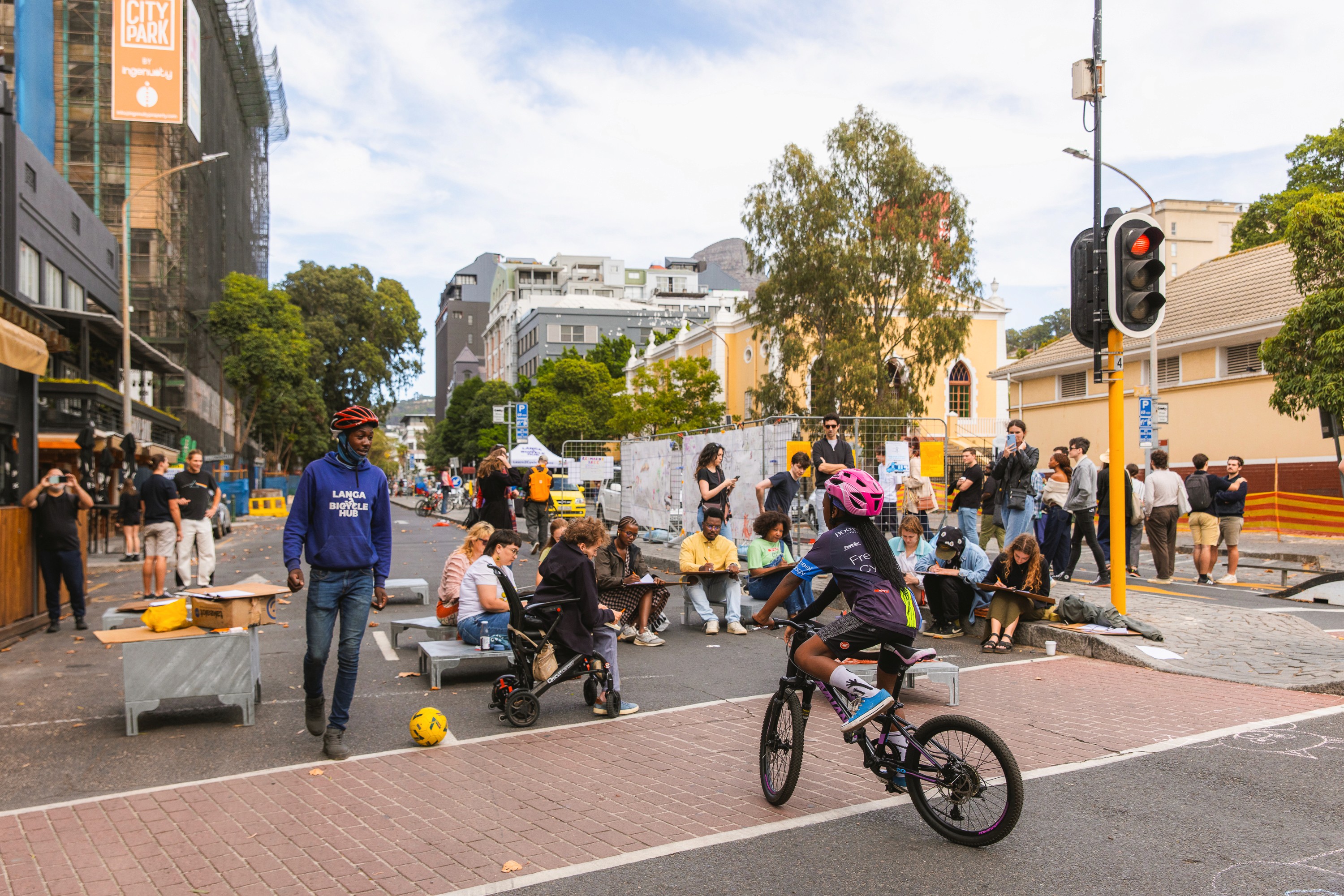
Streets are the city’s largest public spaces, yet they are too often dominated by traffic. Sunday Bree shifts that balance, temporarily turning Bree into a Class 6 street where people come first. The experiment demonstrates what a people-centred Bree Street could feel like, encouraging sustainable mobility, supporting local businesses with greater foot traffic, giving families and children safe space to play, and building evidence for the long-term reimagining of Cape Town’s streets.
The inspiration comes from Open Streets Cape Town, whose early work showed what is possible when streets are opened to people. Sunday Bree takes that spirit forward in a way that is not a festival, not a market, and not about entertainment for its own sake. It is a calm, community-oriented space where people of all ages and backgrounds can experience the city differently.
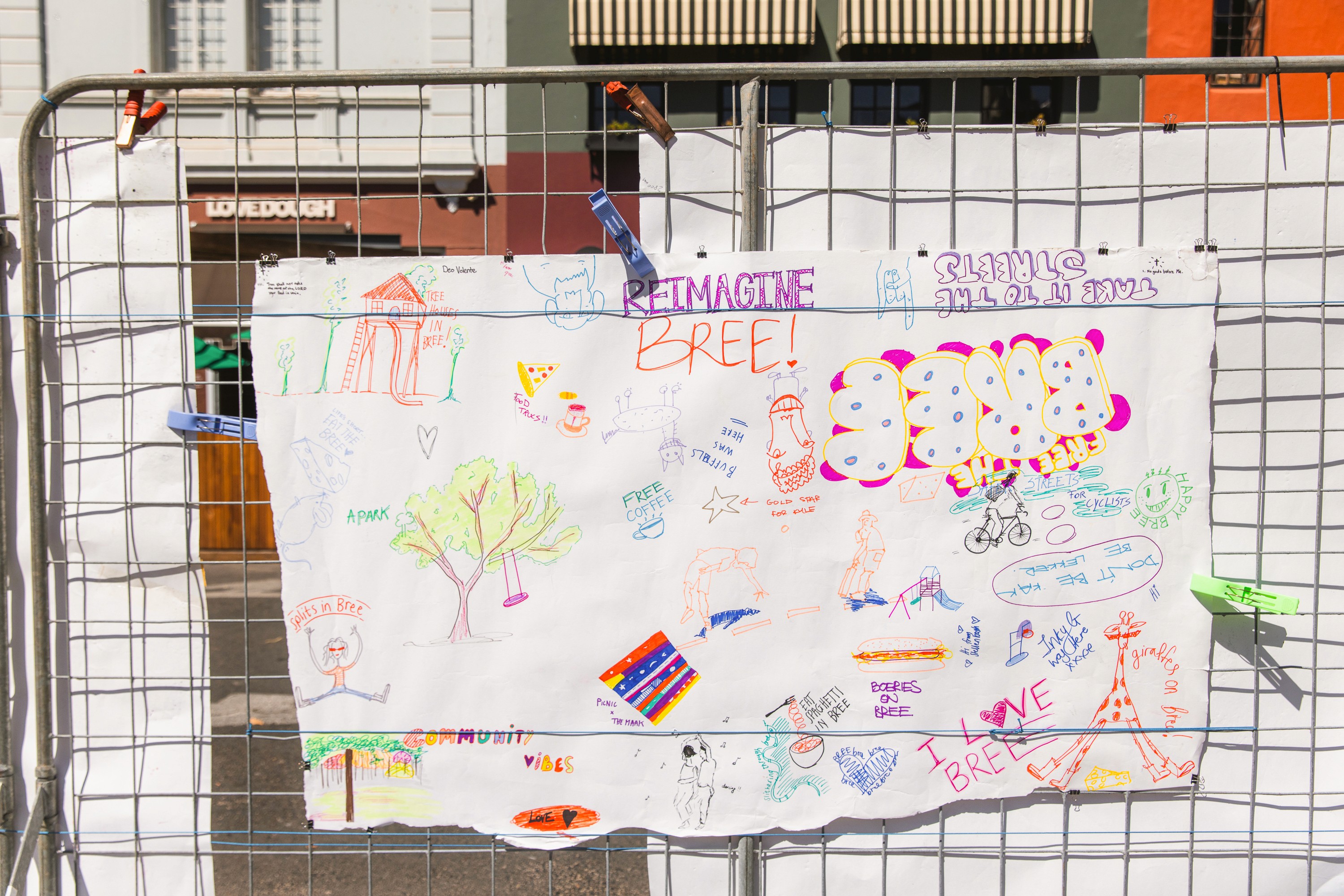
On Sundays, Bree and Shortmarket will come alive with movement and small-scale activity. Families will stroll together, children will play in chalk zones or bubble stations, skaters and cyclists will move freely, and local businesses will connect with more customers as the street fills with people instead of traffic. The absence of amplified music, food trucks or alcohol sales is deliberate, keeping the focus on the street itself and on how people use it when cars are removed.
Participation is open to all. Residents and families are invited to enjoy the street, volunteers can help with setup, marshalling, photography or data collection, businesses can support by sponsoring playful activities in front of their shops, and community groups can bring their own small and inclusive activities. Sunday Bree is a collective effort, led by Young Urbanists NPC in partnership with Mission for Inner City Cape Town, the Mayor’s Office, the City of Cape Town and supported by groups such as Green Riders and the Cape Town Central City Improvement District.
What makes Sunday Bree unique is that it shows how streets can be closed down without breaking the bank, under the right conditions. The learnings from this experiment will be replicated later in the year in Lerotholi Avenue in Langa, and the long-term aim is to both institutionalise these precedents and make them open for all communities to reclaim their roads. This is especially important for lower-class streets and areas around schools, where scholars deserve overdue attention, as they are the most likely to be killed by cars in cities like Cape Town
Sunday Bree is a weekly car-free experiment that will take place every Sunday from 5 October 2025 to 29 March 2026. Each week, Bree Street, between Wale and Strand, together with parts of Shortmarket Street, will be closed to private cars and opened up for people between 10 in the morning and 5 in the afternoon. The street will be transformed into a safe, welcoming space for walking, cycling, skating, playing and connecting in the heart of Cape Town. It is both a community celebration and a living experiment in what happens when streets are designed for people rather than cars.
This is the second time Bree Street will host such an experiment. Previous reports have already shown that local businesses made more money on the day, trade increased, and the character of the street shifted from a place for parking and driving to one where people could shop, linger and connect. The project also aligns with the City of Cape Town’s upcoming Mobility and Accessibility Plan, linked to the Local Spatial Development Framework, by testing in practice what a more people-centred street can deliver.
Streets are the city’s largest public spaces, yet they are too often dominated by traffic. Sunday Bree shifts that balance, temporarily turning Bree into a Class 6 street where people come first. The experiment demonstrates what a people-centred Bree Street could feel like, encouraging sustainable mobility, supporting local businesses with greater foot traffic, giving families and children safe space to play, and building evidence for the long-term reimagining of Cape Town’s streets.
The inspiration comes from Open Streets Cape Town, whose early work showed what is possible when streets are opened to people. Sunday Bree takes that spirit forward in a way that is not a festival, not a market, and not about entertainment for its own sake. It is a calm, community-oriented space where people of all ages and backgrounds can experience the city differently.
On Sundays, Bree and Shortmarket will come alive with movement and small-scale activity. Families will stroll together, children will play in chalk zones or bubble stations, skaters and cyclists will move freely, and local businesses will connect with more customers as the street fills with people instead of traffic. The absence of amplified music, food trucks or alcohol sales is deliberate, keeping the focus on the street itself and on how people use it when cars are removed.
Participation is open to all. Residents and families are invited to enjoy the street, volunteers can help with setup, marshalling, photography or data collection, businesses can support by sponsoring playful activities in front of their shops, and community groups can bring their own small and inclusive activities. Sunday Bree is a collective effort, led by Young Urbanists NPC in partnership with Mission for Inner City Cape Town, the Mayor’s Office, the City of Cape Town and supported by groups such as Green Riders and the Cape Town Central City Improvement District.
What makes Sunday Bree unique is that it shows how streets can be closed down without breaking the bank, under the right conditions. The learnings from this experiment will be replicated later in the year in Lerotholi Avenue in Langa, and the long-term aim is to both institutionalise these precedents and make them open for all communities to reclaim their roads. This is especially important for lower-class streets and areas around schools, where scholars deserve overdue attention, as they are the most likely to be killed by cars in cities like Cape Town
Sunday Bree is a weekly car-free experiment that will take place every Sunday from 5 October 2025 to 29 March 2026. Each week, Bree Street, between Wale and Strand, together with parts of Shortmarket Street, will be closed to private cars and opened up for people between 10 in the morning and 5 in the afternoon. The street will be transformed into a safe, welcoming space for walking, cycling, skating, playing and connecting in the heart of Cape Town. It is both a community celebration and a living experiment in what happens when streets are designed for people rather than cars.
This is the second time Bree Street will host such an experiment. Previous reports have already shown that local businesses made more money on the day, trade increased, and the character of the street shifted from a place for parking and driving to one where people could shop, linger and connect. The project also aligns with the City of Cape Town’s upcoming Mobility and Accessibility Plan, linked to the Local Spatial Development Framework, by testing in practice what a more people-centred street can deliver.
Streets are the city’s largest public spaces, yet they are too often dominated by traffic. Sunday Bree shifts that balance, temporarily turning Bree into a Class 6 street where people come first. The experiment demonstrates what a people-centred Bree Street could feel like, encouraging sustainable mobility, supporting local businesses with greater foot traffic, giving families and children safe space to play, and building evidence for the long-term reimagining of Cape Town’s streets.
The inspiration comes from Open Streets Cape Town, whose early work showed what is possible when streets are opened to people. Sunday Bree takes that spirit forward in a way that is not a festival, not a market, and not about entertainment for its own sake. It is a calm, community-oriented space where people of all ages and backgrounds can experience the city differently.
On Sundays, Bree and Shortmarket will come alive with movement and small-scale activity. Families will stroll together, children will play in chalk zones or bubble stations, skaters and cyclists will move freely, and local businesses will connect with more customers as the street fills with people instead of traffic. The absence of amplified music, food trucks or alcohol sales is deliberate, keeping the focus on the street itself and on how people use it when cars are removed.
Participation is open to all. Residents and families are invited to enjoy the street, volunteers can help with setup, marshalling, photography or data collection, businesses can support by sponsoring playful activities in front of their shops, and community groups can bring their own small and inclusive activities. Sunday Bree is a collective effort, led by Young Urbanists NPC in partnership with Mission for Inner City Cape Town, the Mayor’s Office, the City of Cape Town and supported by groups such as Green Riders and the Cape Town Central City Improvement District.
What makes Sunday Bree unique is that it shows how streets can be closed down without breaking the bank, under the right conditions. The learnings from this experiment will be replicated later in the year in Lerotholi Avenue in Langa, and the long-term aim is to both institutionalise these precedents and make them open for all communities to reclaim their roads. This is especially important for lower-class streets and areas around schools, where scholars deserve overdue attention, as they are the most likely to be killed by cars in cities like Cape Town
Sunday Bree is about shifting the way Cape Town thinks about its streets. For six months, Bree Street becomes a weekly showcase of how public space can serve people, not just cars. It is a demonstration that safer, more vibrant streets are possible, affordable, and within reach when communities, businesses and the city work together.
RSVP for the first Sunday on the 5th of October Complete the Open Call for activation ideas and volunteers Join the WhatsApp Community Group for better updates Follow Street Experiments SA on Instagram or Linkedin
Young Urbanists NPC, Mayor Office, Urban Mobility, Mission For Inner City Cape Town, Cape Town Central City Improvement District and the Active Mobility Forum.
Share the 2024 - '25 Report
We Advocate for Infrastructure, not paint. Fueled by Young Urbanists and the Bicycle Mayor of Cape Town